ChaseInTech Digest
ChatGPT Health can connect to your medical records. Check these five things first
ChatGPT Health can bring medical records and wellness data into an AI workspace. Check permissions, retention, deletion, sources and professional handoff before connecting.
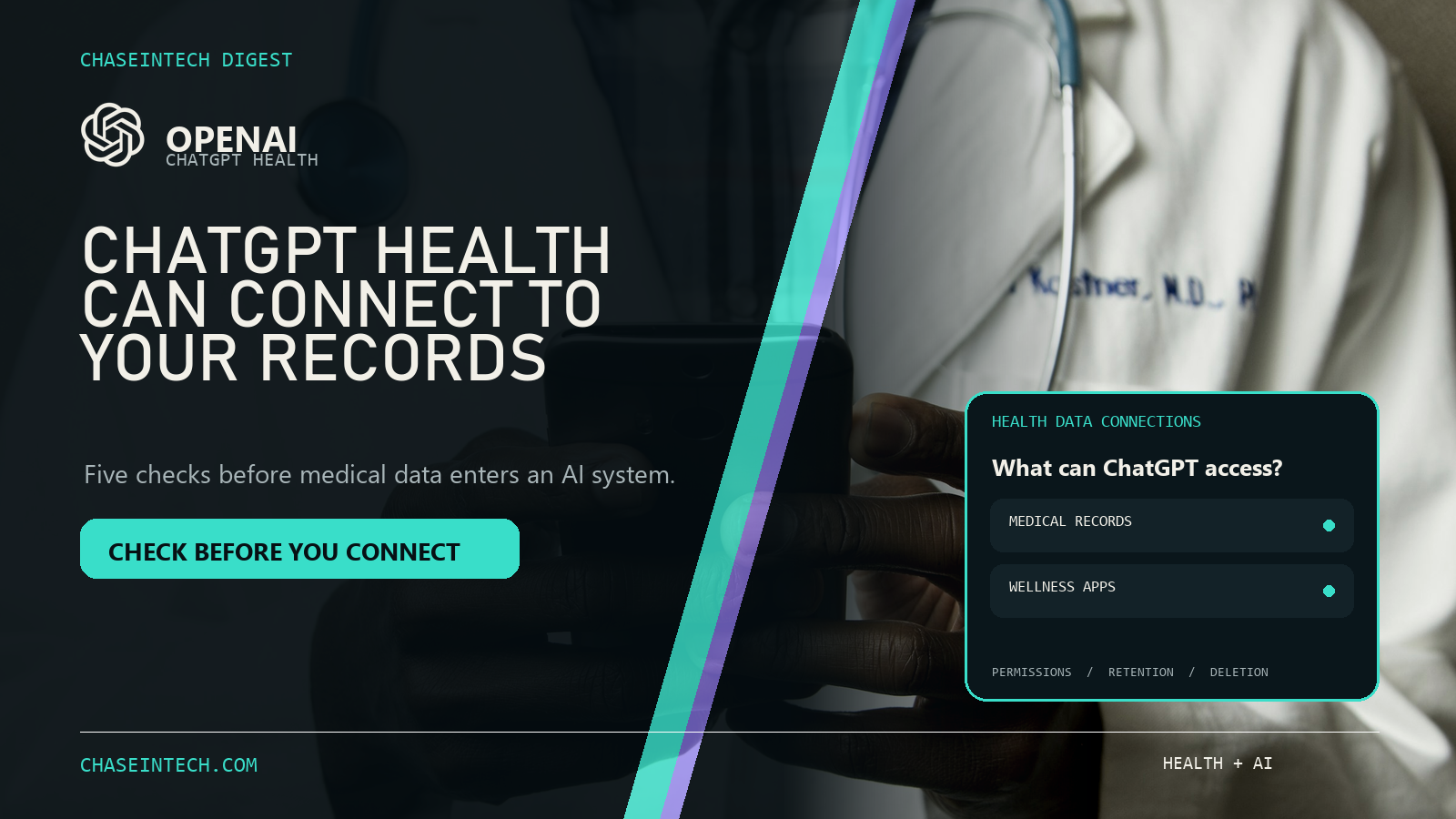
ChatGPT Health can connect medical records and wellness apps inside a dedicated health space. That could make scattered information easier to understand before an appointment.
It also creates a much wider trust boundary.
Medical records are not another casual chat import. They can contain diagnoses, medications, test results, clinician notes and years of personal history. Before connecting anything, I would want five questions answered clearly.
1. What exactly can the connector access?
A permission screen should explain which records, providers, apps and date ranges will be imported. “Health data” is too broad.
The safest connection gives the product only what the current task needs. If the goal is to prepare for one appointment, importing an unlimited history from every available source may be unnecessary.
2. What is retained after disconnection?
Removing a connector and deleting imported data are not always the same action.
A user should be able to see what remains after access is revoked, how long it remains and which controls remove it. This is especially important when the system creates summaries or derived notes from the original records.
OpenAI says health data is encrypted, isolated from regular chats and not used to train its foundational models. Those are meaningful product commitments. They should still be read alongside the connector and account controls that protect the wider data path.
3. Can the data be exported and deleted?
A personal health product should not become another place where information gets trapped.
Users need a clear export route and a clear deletion route. The interface should also distinguish deleting one conversation, removing imported records and closing the health space entirely.
4. Where do medical claims come from?
A polished response can still be wrong. Health answers should make the source boundary visible and help the user separate information support from a clinical decision.
A useful workflow is to turn unfamiliar language into questions for a qualified professional. A risky workflow is to treat a generated answer as a diagnosis or emergency decision.
ChatGPT is not a substitute for a clinician. Urgent symptoms and emergency decisions should go to appropriate medical services rather than a chatbot.
5. When does a professional take over?
The strongest use case is appointment preparation.
The system can help organise:
- recent changes;
- medications and test results;
- questions to ask;
- missing records;
- areas that need a professional answer.
The clinician still owns the medical decision.
A bounded workflow that makes sense
I would use ChatGPT Health to build a short appointment brief. It should contain a timeline, key changes, current medications, unresolved questions and links back to the underlying records.
Then I would review the brief, correct anything that looks wrong and take it into the appointment.
That removes friction without pretending the model has clinical authority.
Product trust has to stay visible
Consumer AI becomes useful when it helps people prepare and understand. The product loses trust when convenience hides permissions, retention or medical limits.
ChatGPT Health may become a useful personal information layer. The five checks above should remain easier to find than the connect button.
Sources and claim boundary
OpenAI’s privacy and product statements are publisher-reported. This article is not medical advice and does not endorse diagnosis through ChatGPT.